 Alex Morgan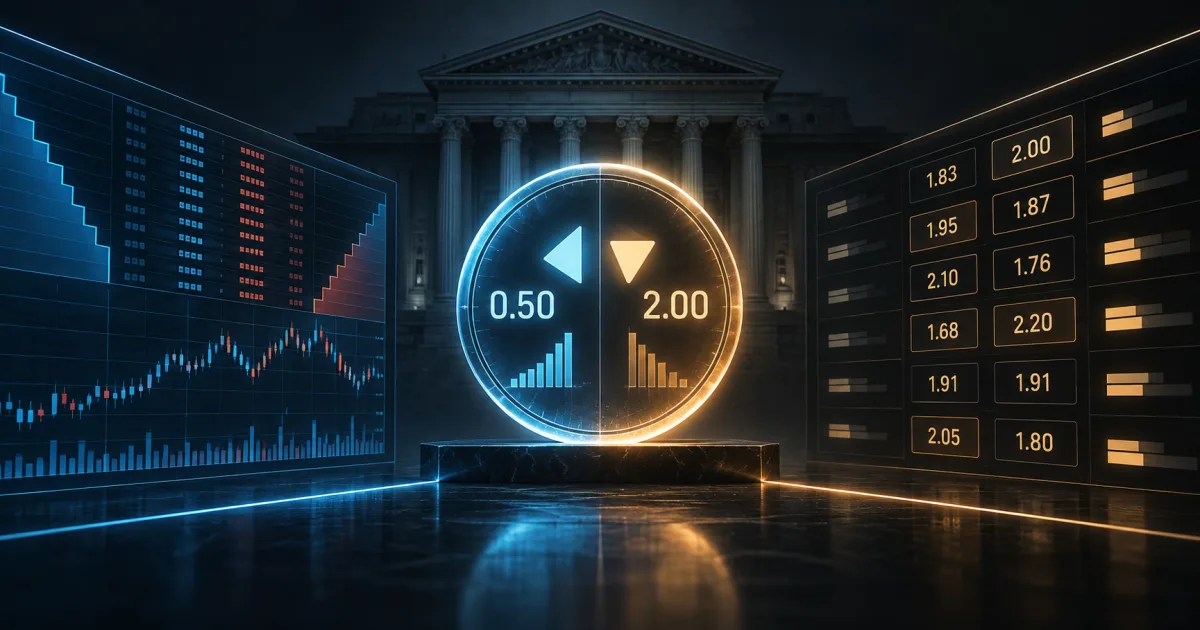
Prediction Markets: A New Form of Trading or Betting Under Another Name?
On September 24, New York sued Polymarket US and described its prediction market as an illegal, unlicensed gambling operation. Hours later, Polymarket filed its own federal case. Its position is almost the exact opposite: Polymarket says it operates a federally regulated market, so individual states should not be able to treat the same contracts as ordinary gambling.
It is important to distinguish the Polymarket brand from its US structure. The dispute concerns QCX LLC, doing business as Polymarket US. This is the company that holds US exchange status and offers sports event contracts to American users. Unless stated otherwise, references to Polymarket below mean Polymarket US.
The dispute is easy to present as another fight between a regulator and a fast-growing platform. The more interesting question is about the product itself:
When does a prediction market stop being financial trading and become sports betting?
This question matters because a sports contract can look different from a bookmaker’s bet behind the screen while producing almost the same economic result for the person buying it.
Prediction markets are now fighting for more than access to one state. They are trying to establish that they are a distinct legal category that can exist alongside sportsbooks and financial exchanges. We are watching that category take shape in real time: the products are already available, demand is growing, but courts and regulators still disagree about what they actually are.
One football result, two products
Suppose Arsenal is priced at decimal odds of 2.00 to win a match.
| Sportsbook | Polymarket |
|---|---|
| Arsenal to win at 2.00 | Arsenal Yes contract at $0.50 |
| Stake: $100 | Buy 200 contracts for $100 |
| Total return if Arsenal wins: $200 | Settlement if Arsenal wins: $200 |
| Gross profit: $100 | Gross profit: $100 |
The example excludes fees, spread and slippage. Those costs can change the final result, but they do not change the basic comparison. In both cases, the participant risks $100 on Arsenal winning and earns a gross profit of $100 if it happens.
From the user’s perspective, the exposure is remarkably similar. Legally and operationally, however, the two transactions are presented as different products.
The sportsbook model
A sportsbook publishes odds and acts as the counterparty to the customer. It manages the combined liability of its book, adjusts prices, applies limits and builds a margin into the market.
Its regulation is primarily state based in the United States. A licensed operator must comply with local requirements covering market access, geolocation, minimum age, taxation, responsible gambling and the types of bets it may offer.
Under this model, an Arsenal bet is plainly a wager. Calling the selection a contract would not change its substance.
The Polymarket model
Polymarket describes a different structure. Users buy and sell Yes and No contracts through an order book. Prices are formed by bids and offers from market participants and market makers. A correct contract settles at $1; an incorrect contract settles at $0. The holder can also sell before the event is resolved.
These instruments are called derivatives: financial contracts whose value depends on something else. Here, the value depends on the outcome of an event such as a team winning, an election result or an interest-rate decision. The word does not automatically make the contract a financial product rather than a bet, but it explains why Polymarket places it within the financial-market framework.
The idea of a derivative predates prediction markets by a long way. Imagine a farmer who will harvest grain several months from now but does not know what its market price will be. The farmer can agree on a price with a buyer in advance and reduce the risk of a sharp fall. The buyer gains protection against a possible price increase. Modern futures trading grew out of arrangements like these.
In the United States, the founding of the Chicago Board of Trade in 1848 was an important step. It began as a grain market and started standardising contracts for future delivery during the 1850s. Derivatives later expanded beyond agricultural goods to currencies, interest rates, oil, stock indices and many other assets. CFTC history of the futures markets.
The most common types of derivatives include:
- a future, which sets the terms for buying or selling an asset at a later date;
- an option, which gives its holder the right, without the obligation, to buy or sell at an agreed price;
- a swap, through which two parties exchange payments or financial risks, such as payments based on different interest rates.
They share one basic idea: the contract derives its value from another asset, measure or event. On Polymarket, that event may be a team winning. The dispute with New York is partly about whether this structure is enough to make a sports contract a derivative rather than a bet.
The platform is therefore not simply quoting odds and taking the other side of every position. It provides exchange, matching and clearing infrastructure for contracts traded between participants.
This distinction is real. An order book produces visible liquidity and allows a price to move continuously as information changes. A user may enter at $0.50 and leave at $0.65 without waiting for the match to finish. Market makers can quote both sides, and an application programming interface can support systematic trading.
But a real structural difference does not automatically answer the legal question. The underlying event is still Arsenal winning, the trader still risks money, and the payoff still depends on an uncertain sports result.
New York’s case: the contract is still a wager
The New York Attorney General’s announcement says Polymarket’s markets meet the state’s definition of gambling because users risk money on uncertain outcomes outside their control. The state says Polymarket offers those products without a New York gaming licence.
The complaint is not concerned only with terminology. New York points to consequences that follow from placing the product outside its gambling regime:
- users aged 18 to 20 can access markets, while mobile sports betting in New York is restricted to people aged 21 and over;
- Polymarket does not pay the taxes imposed on licensed gambling operators;
- the platform does not operate under the same state rules for consumer protection and responsible gambling;
- New York cannot control which sports products are made available to residents in the way it controls licensed sportsbooks.
The state’s argument is essentially functional. If a customer pays money for a position on a sports outcome and receives a payout when that prediction is correct, an order book should not turn the transaction into something wholly unrelated to betting.
This logic becomes more persuasive as prediction platforms move closer to a conventional sportsbook line. A contract on a presidential election or an interest-rate decision can be discussed as a tool for aggregating information about a major public event. A contract on a match winner already resembles a moneyline. Player props, corners and multi-leg combinations look closer still.
Polymarket’s answer: New York is not the main regulator
Polymarket US operates through QCX LLC, a designated contract market listed by the CFTC. In simple terms, it is an exchange supervised by the federal regulator for derivatives markets. In its federal lawsuit, QCX LLC v. James, Polymarket asks the court to prevent New York officials from applying the state’s gambling laws to its exchange.
The argument can be expressed without legal terminology: who gets to set the rules? Polymarket says the federal government has already placed its exchange under the CFTC. In its view, New York cannot look at the same contracts, call them gambling and impose a second, incompatible set of rules.
This argument also has a practical side. An exchange designed to operate nationally cannot easily function if the same contract is treated as a federally regulated derivative in one jurisdiction and an illegal sports wager in another. Different state rules could fragment liquidity, restrict counterparties and undermine a national order book.
Federal regulation is not the same as an absence of regulation. The exchange must verify participants, monitor trading, keep records and ensure settlement. The disagreement is about which regulator gets the final word, rather than whether any rules exist at all.
At the time of publication, no court had decided which side was right on the merits. New York had filed its claims, and QCX had answered with a federal case of its own. This is the beginning of the legal conflict, not a final ruling on the status of sports event contracts.
Does market structure change the nature of the risk?
There are two reasonable ways to look at the same Arsenal contract.
The first focuses on economic substance. The participant pays $100, predicts a sporting result and may receive $200. Under this view, the position behaves like a sports bet, regardless of whether the interface displays odds or cents.
The second focuses on market structure. The participant buys a transferable contract from an order book, trades against other market participants and can sell the position before settlement. Under this view, the transaction belongs to an exchange rather than a bookmaker’s balance sheet.
Neither description is fictional. The difficult part is deciding which feature should control the legal classification.
The usual distinction between a sportsbook and an exchange does not resolve it either. Betting exchanges also match participants, display order-book liquidity and allow positions for and against an outcome. They are nevertheless regulated as gambling venues in the jurisdictions where they operate.
That comparison strengthens New York’s argument that matching buyers and sellers is not enough by itself. Polymarket’s stronger response is that its exchange exists inside a specific federal statutory framework that a conventional betting exchange does not share.
Where does the line become hardest to defend?
The category called “prediction market” covers products that serve very different purposes:
inflation → interest rates → elections → championship winner → match winner → totals → player props → corners → parlays
At the left side, prices can provide information about economic or political expectations and may help a business or investor hedge an identifiable risk. At the right side, the contracts increasingly reproduce markets already found in sportsbook interfaces.
That does not necessarily mean the law must draw the line at a particular market type. It does explain why the debate changes when a platform expands from a small set of public-interest questions into a full sports product.
Sometimes a sports contract can genuinely protect a business from an expense. For example, a restaurant promises customers free drinks if a team wins. A victory would cost the restaurant money, while a contract bought in advance could offset part of that cost.
That explanation is much less convincing for a market on the number of corners or a parlay built from player statistics. A participant will usually buy such a contract to profit from a correct prediction, rather than to protect against an existing financial risk. At that point, the product begins to look especially similar to an ordinary bet.
The legal issue is therefore larger than whether sports have economic consequences. Professional sports are unquestionably a major business. The question is whether every trade connected to that business is the kind of derivative Congress intended to place under exclusive federal commodities regulation.
Kalshi shows that the whole industry is fighting the same battle
Polymarket is not the only platform making the federal-preemption argument. Kalshi has brought similar cases against state regulators, and the federal courts have not reached a uniform answer.
One federal appeals court supported Kalshi in its dispute with New Jersey. Another reached the opposite conclusion. On September 25, the appeals court hearing the Ohio and Tennessee cases also rejected Kalshi’s attempt to stop those states from enforcing their gambling laws. In ordinary language, Kalshi did not persuade the court that calling these products federally regulated contracts necessarily puts them beyond the reach of state gambling regulators.
This was not a final judgment declaring every Kalshi contract unlawful. Kalshi had asked the court for protection from state enforcement while the disputes continued, and the court refused. Its reasoning is nevertheless significant. The judges specifically questioned how markets on the number of corners in a football match or a 30-leg parlay serve the financial purposes usually associated with derivatives markets.
The fact that major courts are reaching different answers makes Polymarket’s New York case part of a broader unresolved conflict. Congress or the Supreme Court may eventually have to provide one national rule.
For prediction markets, this is a fight for the right to exist in their current form. A victory would help establish them as a separate national market category. A defeat would not necessarily make prediction markets disappear, but it could push their sports products into the same state-by-state licensing system as sportsbooks.
What the dispute means for bettors and traders
The eventual answer will affect much more than the label shown above the market.
If state gambling law applies, prediction platforms may need gaming licences, state-by-state product approval, geolocation and a minimum age of 21 in some jurisdictions. Sports coverage could narrow, and national liquidity could split between states.
If federal commodities regulation controls, platforms may be able to offer one national pool of liquidity with broader API access and exchange-style market making. The difference could allow prediction exchanges to compete directly with DraftKings, FanDuel and sportsbook models built around operator-set prices.
The classification may also affect taxation, advertising, responsible-gambling controls, integrity monitoring and the treatment of professional traders. These are not secondary details. They determine who can use the product, which markets can exist and how cheaply a position can be traded.
We are watching the rules of a new market being written
Polymarket has a credible reason to say its infrastructure is not that of a bookmaker. New York has a credible reason to say the customer’s sports exposure still looks like betting. The two claims can be true at the same time.
That is what makes the case more important than a dispute over branding. The court will have to decide how much the exchange structure matters when the event, risk and payoff closely resemble a conventional wager.
Prediction markets have already moved from a niche experiment into elections, economics, news and sport. Their legal identity has not developed at the same speed. That puts us in an unusual moment: we can see a new market model gaining users while its basic right to operate is still being tested in court.
The outcome will help determine whether prediction markets become a lasting third category next to sportsbooks and financial exchanges, or whether their sports products are absorbed into existing gambling regulation. Until that line becomes clearer, the most useful question is not whether Polymarket calls the product trading. It is whether the way a market is organised is enough to make a $0.50 sports contract legally different from a bet at 2.00.
Primary sources
- New York Attorney General lawsuit announcement
- Federal docket for QCX LLC v. James
- CFTC listing for QCX LLC / Polymarket US
- Sixth Circuit opinion in the Kalshi Ohio and Tennessee cases, PDF
This article explains a public dispute in plain language and is not legal advice.